 3 minute read
When You Can’t Stop the Site: Capturing Accurate Data in Live Environments
Most sites don’t pause for data capture.
Work continues. People move. Conditions change.
And yet, the expectation remains the same — capture accurate, complete data that can be relied on long after leaving site.
In live environments, the difficulty isn’t just capturing accurate measurements, it’s maintaining consistency as conditions change between scan positions.
The gap between planned workflows and real-world site conditions
On paper, site documentation is straightforward.
Set up. Capture. Move to the next position.
But in practice, sites are rarely controlled environments.
• Operations can’t be interrupted
• Access is often limited
• People and equipment are constantly moving
• Weather and lighting conditions shift throughout the day
You’re not capturing a static environment — you’re capturing something that’s actively changing.
"And this is where traditional terrestrial laser scanning workflows that are built around “stop-and-scan”— start to break down.
In our experience, this gap between planned workflows and real-world conditions is where most data capture challenges begin.
When stopping isn’t an option on active sites
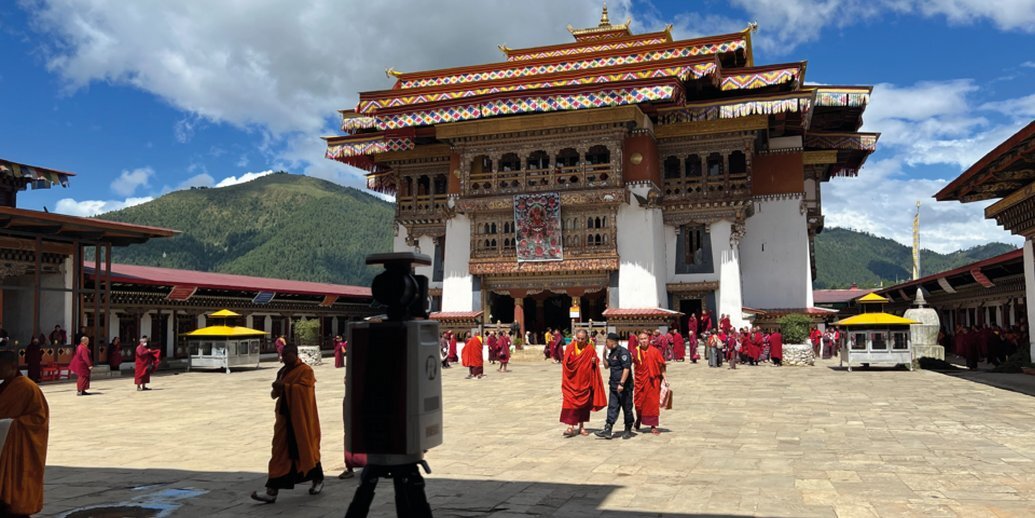
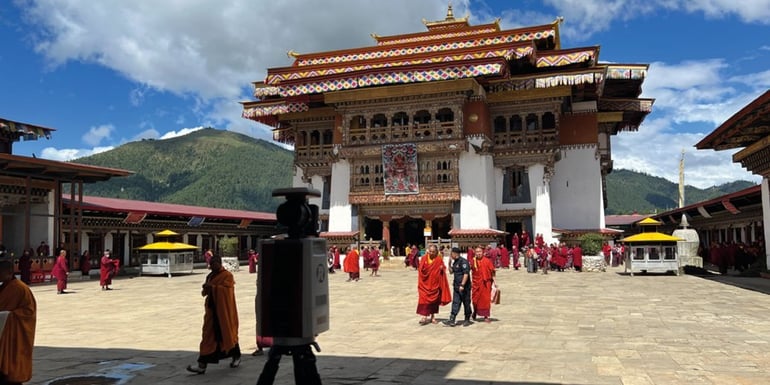
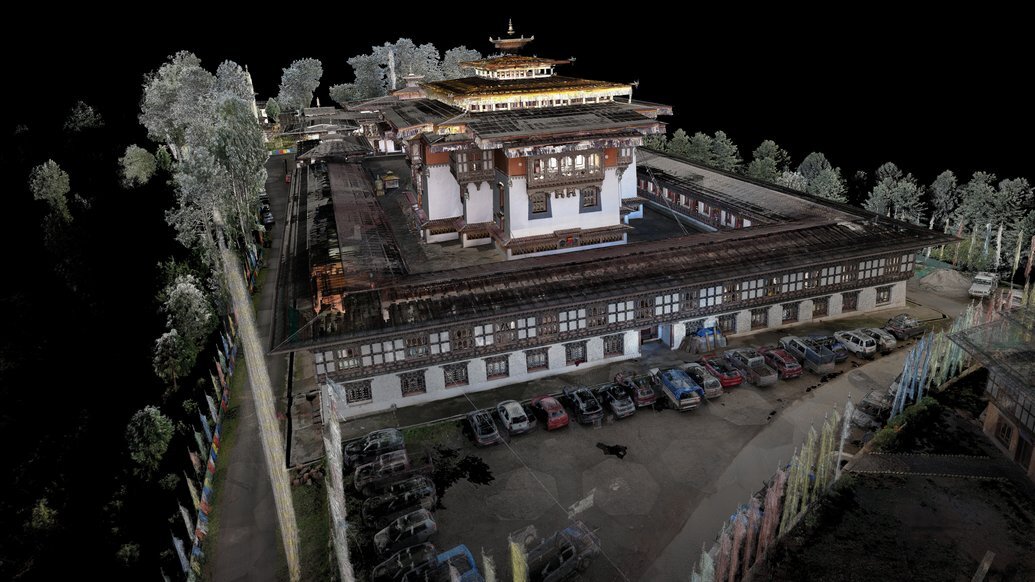
A recent project documenting the Gangtey Monastery in Bhutan highlights this clearly.
This wasn’t just a structure to be scanned — it was a living, active environment.
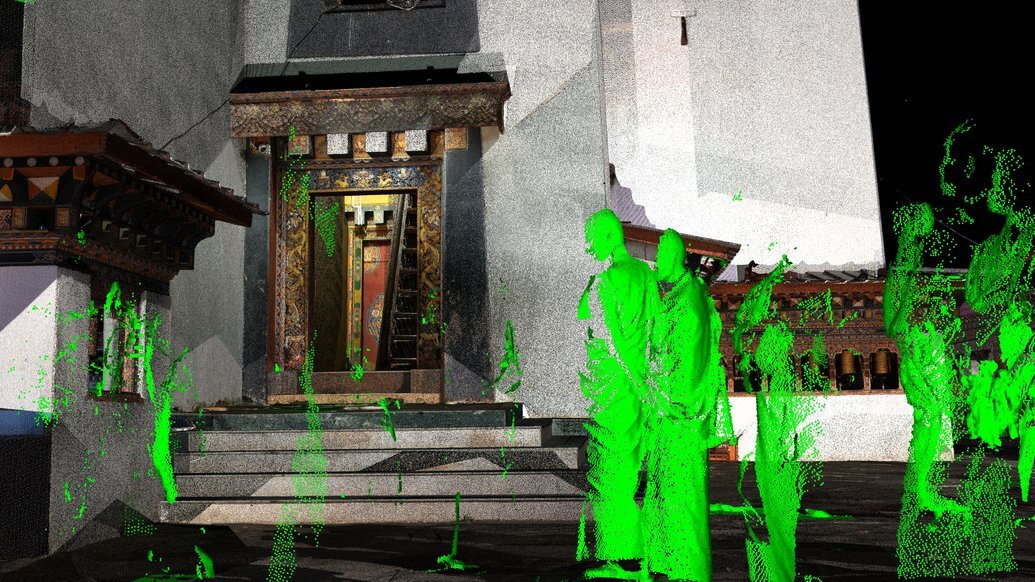
Ceremonies continued throughout the day, with monks and visitors moving freely through the space.
Stopping activity for the sake of capture simply wasn’t an option.
So instead of trying to control the environment, the team adapted to it.
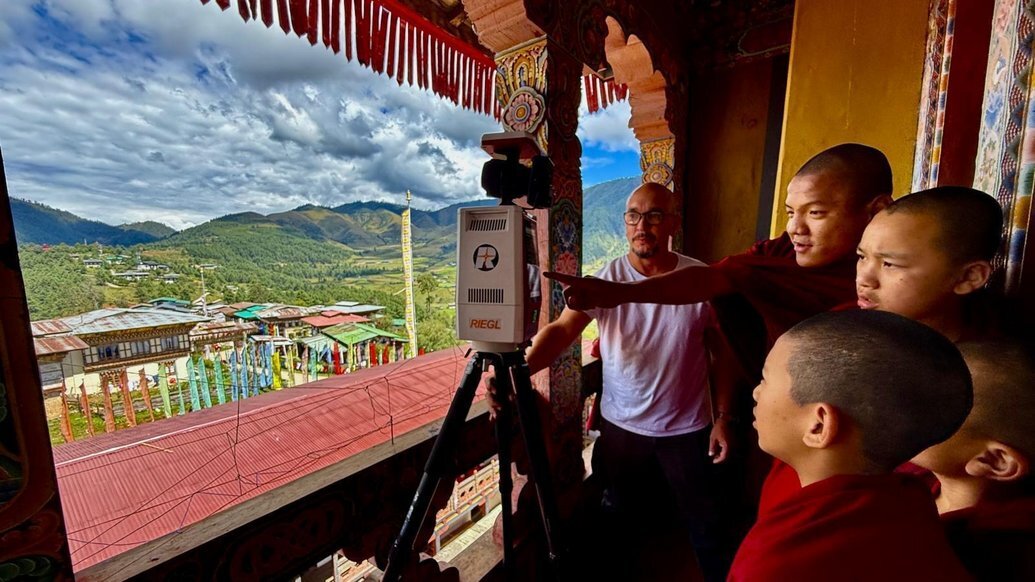
Using the RIEGL VZ-600i terrestrial laser scanner, they completed over 1,100 scan positions across four days — all while the site remained fully operational.
No staged conditions. No cleared spaces. Just continuous, real-world activity.
This reflects a broader shift we’re seeing across construction, infrastructure, and public safety:
"Capturing workflows can no longer depend on ideal conditions.
Capturing accurate data in motion
Working in live environments shifts what “good capture” actually means.
The challenge isn’t precision in isolation — it’s maintaining consistency as conditions change between scan positions.
Even small variations can introduce issues:
• Movement between scans
• Changes in lighting or visibility
• Misalignment between imagery and point cloud data
"On active sites, the biggest risk isn’t missing data - it’s trusting data captured under inconsistent conditions.
This is where workflow design becomes critical.
In the Gangtey Monastery project, capturing imagery and LiDAR data simultaneously helped maintain consistency across the dataset. Movement between scans didn’t create the same level of mismatch that often occurs when these are captured separately.
Maintaining strong overlap between scan positions also played a key role in ensuring reliable registration.
From our perspective, this is where many projects succeed or struggle —
not in the capability of the scanner, but in how the capture workflow handles change.
Why faster LiDAR capture improves data reliability
Each scan position in this project was completed in under a minute.
At first glance, that sounds like a productivity gain. But in live environments, speed has a different impact.
Faster capture means:
• Less exposure to changing conditions between scans
• Greater consistency across the dataset
• More flexibility to adapt positioning in real time
"In other words, speed directly supports data reliability - not just efficiency.
In many cases, slower “stop-and-scan” approaches introduce more risk than they remove, simply because conditions have more time to change between positions.
This is something we consistently see across active sites.
From field capture to usable data
For many teams, the biggest challenges don’t show up during capture — they show up afterwards.
Registration. Alignment. Clean-up.
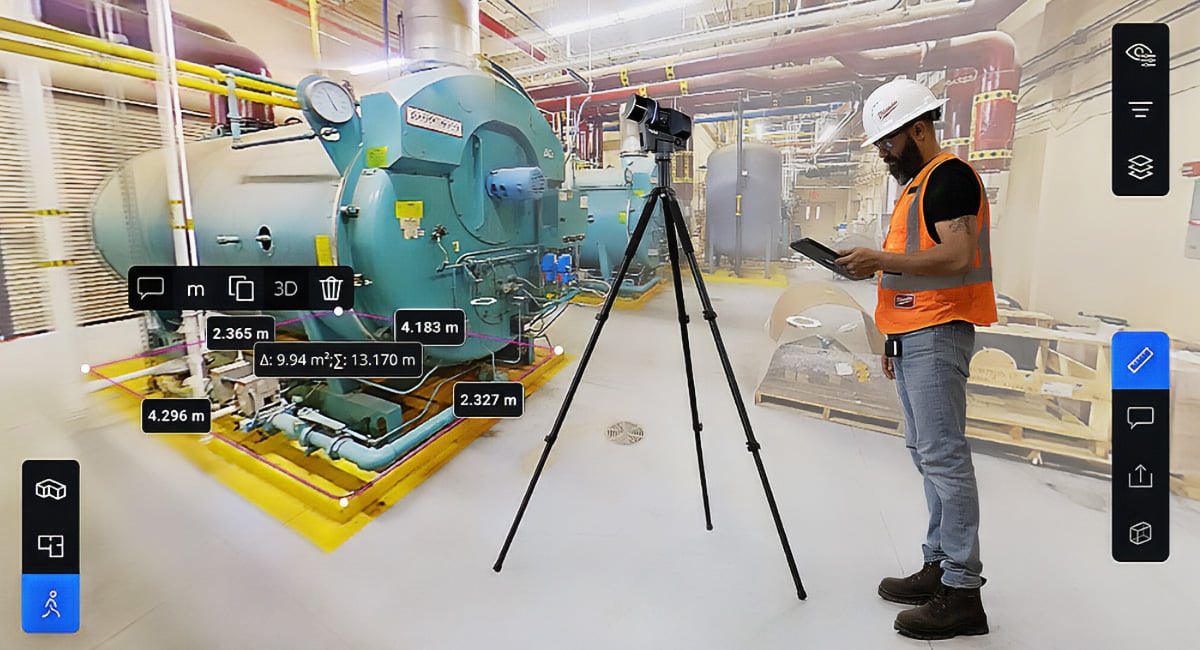
In this case, much of the scan registration was handled in the field, with near real-time alignment between scan positions. That allowed the team to validate coverage and completeness before leaving site. That step alone can significantly reduce downstream risk.
Even with continuous activity, the dataset could be refined. Moving people and objects were identified and removed during processing, resulting in a clean, usable point cloud — without needing to control the environment during capture.
From a workflow perspective, this is a critical shift:
verify data quality while still on site, rather than discovering gaps later.
Working with reality, not against it
The takeaway here isn’t about a single project or a specific system.
It reflects a broader shift in how reality capture workflows are being approached.
Most challenges don’t come from the technology itself. They come from the assumption that sites can be controlled.
In reality, they can’t.
Across the projects we see, the most effective workflows are built around this understanding — designed to adapt to real conditions, not ideal ones.
What this means in practice
For teams working in live environments, a few principles consistently make a difference:
• Prioritise consistency over perfect conditions: Reliable overlap and structured capture matter more than waiting for a “clear” site.
• Reduce separation between data types: Capturing imagery and LiDAR together helps avoid alignment issues later.
• Validate on site, not afterwards: Real-time or in-field registration reduces the risk of missed coverage.
• Use speed to your advantage: Faster capture isn’t just efficient — it limits exposure to change.
• Design workflows for movement, not stillness: Assume the environment will change, and plan capture strategies accordingly.
These aren’t theoretical improvements — they directly impact how usable and reliable your data is once you leave site.
Why this matters
Whether it’s construction, infrastructure, or public safety, the same constraint applies:
You get one chance to capture what’s there.
And that capture needs to hold up — days, weeks, or months later — when decisions are being made.
Working in live environments isn’t the exception anymore. It’s the norm.
The question is whether your workflow is built for it — or still depends on conditions that rarely exist.
If you’re navigating similar challenges on active sites, it may be time to rethink how your workflows handle change.
Get in touch with the Synergy team for a practical discussion on what works.
Source: This article and accompanying images draw on a RIEGL case study documenting the Gangtey Monastery in Bhutan using the VZ-600i terrestrial laser scanner.

 4 minute read