 3 minute read
Pre-Incident Planning Made Measurable: The Shift from Interpretation to Measurement
How Reality Capture Is Changing Public Safety Preparation.
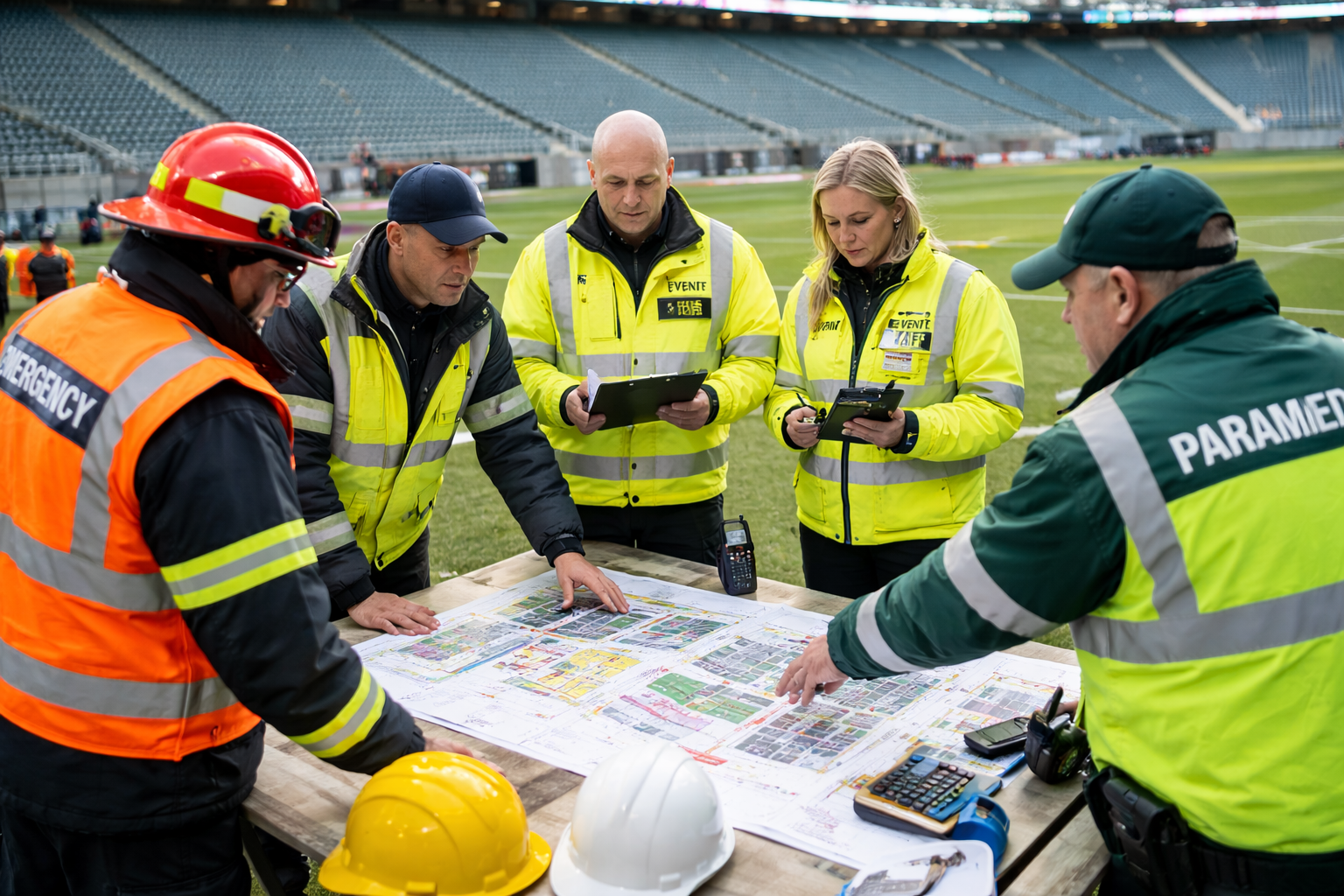
A week before a major public event, multiple agencies walk a venue together - police, fire, emergency management, security.
They carry printed floor plans - some updated, some not.
They take photographs.
They annotate PDFs.
They discuss entry routes, choke points, staging areas.
Everyone leaves with information.
But not necessarily the same version of it.
Pre-incident planning has always been central to public safety operations. The challenge is not preparation itself - it is ensuring that preparation reflects measurable, current reality when it matters most.
As public events grow larger, infrastructure becomes more complex, and accountability increases, agencies are seeking something more reliable:
Accurate, measurable, rapidly deployable spatial data.
This is where mobile laser scanning is redefining pre-incident planning.
The Challenge: Preparation That Keeps Up with Reality
Public safety teams face increasing pressure to:
- Plan for large-scale public events
- Document critical infrastructure
- Prepare for emergency response scenarios
- Improve inter-agency coordination
- Reduce on-site documentation time
In practice, documentation is often fragmented.
One team holds photographs.
Another maintains annotated drawings.
A third relies on memory from a site walk months earlier.
When multiple agencies respond to the same incident, they must operate from the same spatial understanding. Misalignment creates delay - and delay introduces risk.
Traditional site surveys can also be slow and disruptive. Tripod setups require repositioning. Alignment happens later. Post-processing takes time. By the time documentation is consolidated, operational planning may already be underway.
What’s needed is a way to:
- Capture complex environments quickly
- Produce accurate, court-defensible data
- Visualise and share site conditions immediately
- Reduce time spent in the field
A Practical Shift: Mobile Laser Scanning for Pre-Incident Planning
Modern mobile laser scanning systems, such as the FARO Orbis Premium, are helping agencies transform how they document physical spaces.
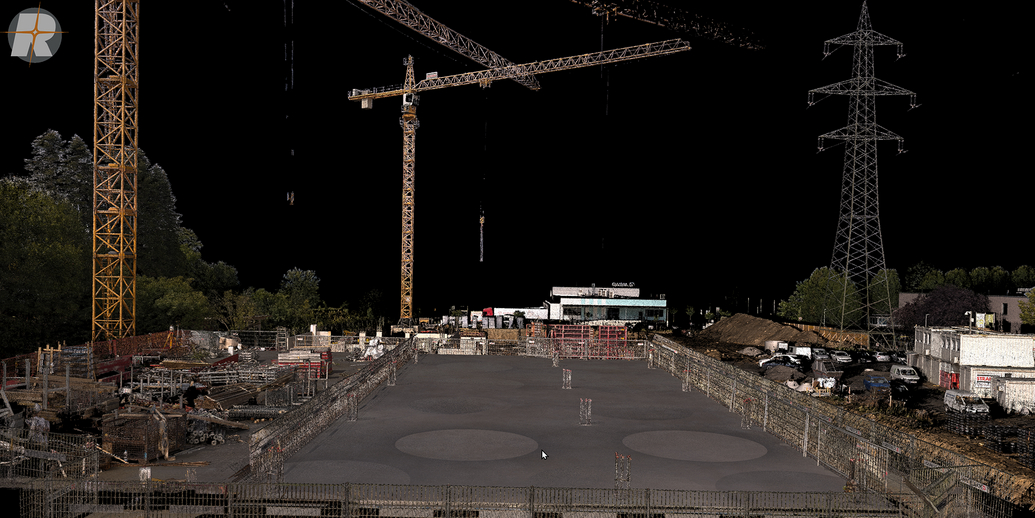
Instead of relying solely on static tripod setups or manual measurement methods, teams can walk through indoor or outdoor environments, capturing millions of data points per second and generating high-resolution 3D models with sub-millimetre accuracy.
With real-time registration and integration into platforms like FARO SCENE and FARO Zone, data is aligned and visualised immediately - eliminating extended post-processing cycles.
A venue that previously required multiple static setups and days of alignment can now be documented in a single operational pass - often within hours - with immediate confirmation that coverage is complete.
There is no need to return for missed measurements.
No uncertainty about whether a corridor was captured.
The environment is recorded once - accurately - and preserved digitally.
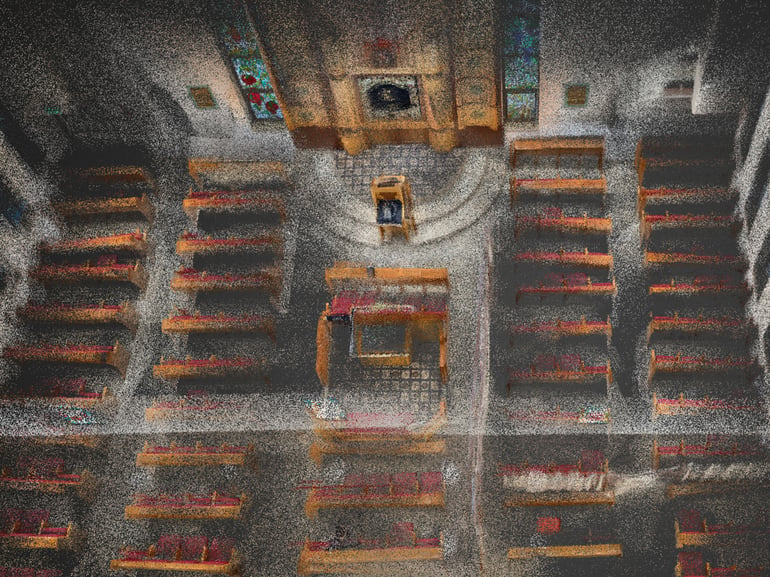
Use Case: Large Event Pre-Planning
Consider a city preparing for a large festival, sporting event, or high-profile gathering.
Pre-incident documentation typically involves:
- Mapping entry and exit routes
- Identifying choke points
- Recording building interiors
- Documenting surrounding infrastructure
- Establishing staging areas
With mobile scanning, teams can document entire venues and surrounding areas in a fraction of the time traditionally required.
The resulting 3D models allow agencies to:
- Run response simulations
- Measure distances and clearances accurately
- Share spatial data across departments
- Improve tactical planning
- Maintain a digital record for future reference
Survey time can be significantly reduced while increasing overall completeness and accuracy.
The result is not just faster documentation - but more confident operational planning.
"Moving public safety from assumption to evidence."
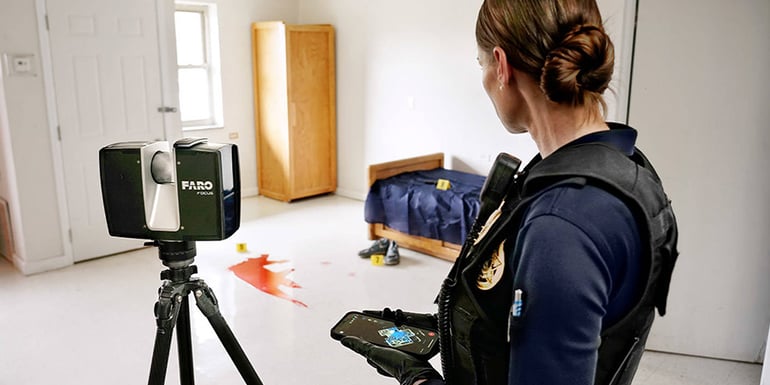
Beyond Events: A Broader Public Safety Impact
Mobile laser scanning is equally valuable across:
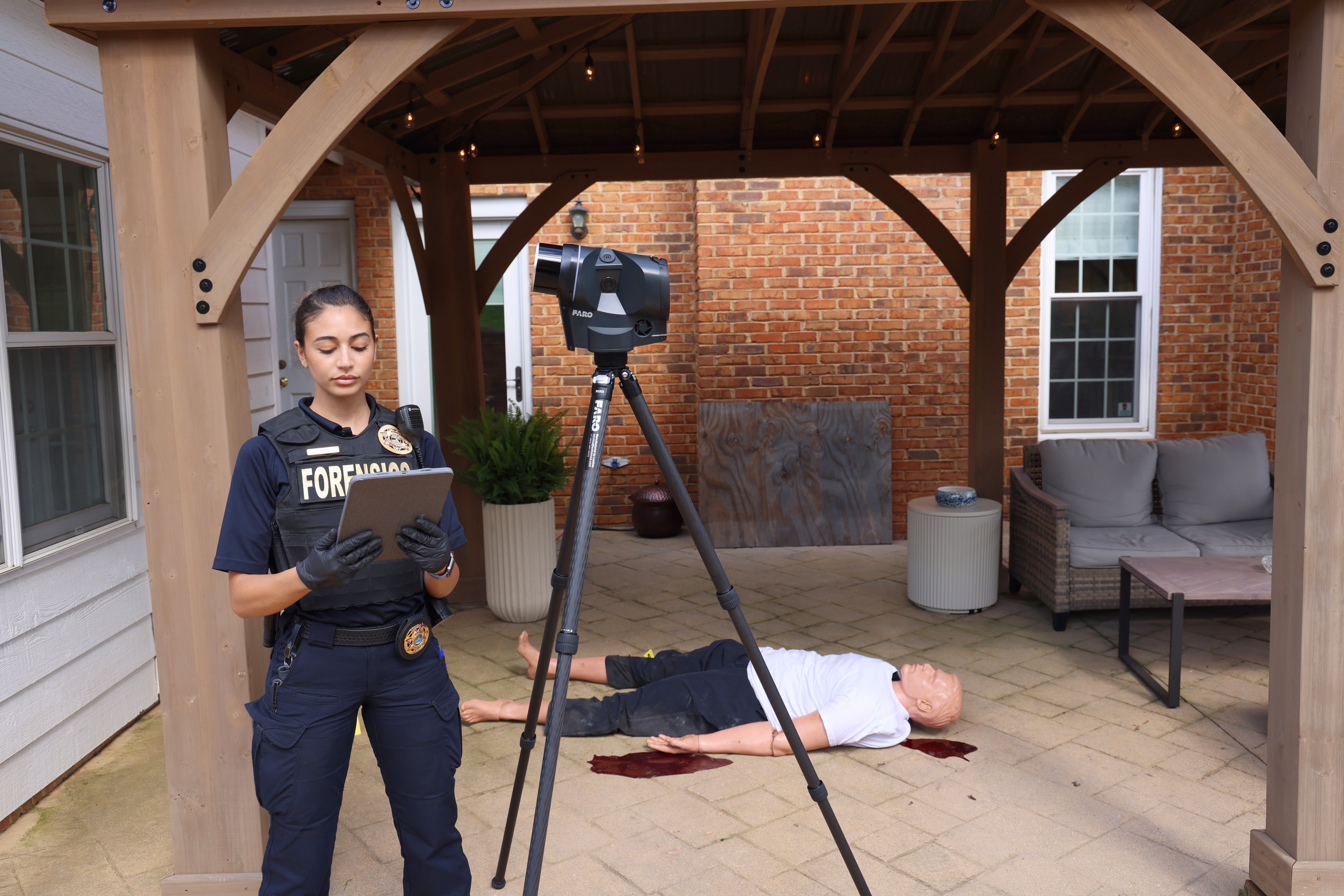
- Forensic scene documentation
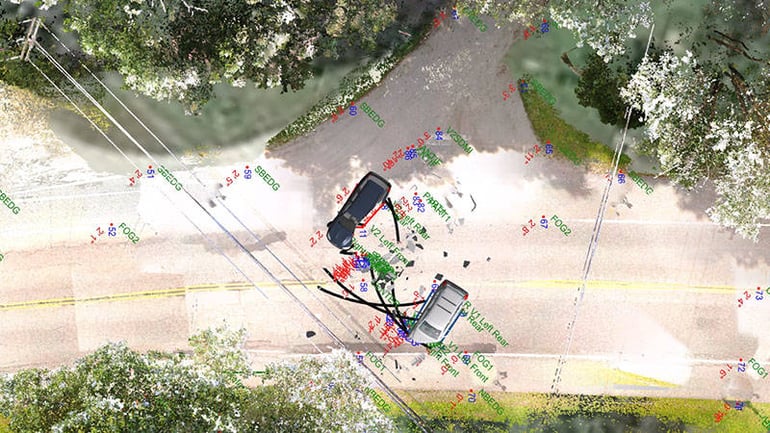
- Collision investigation
- Infrastructure inspection
- Critical facility documentation
- Disaster preparedness planning
By capturing detailed, measurable 3D environments, agencies reduce reliance on sketches, static images, and recollection.
Instead, they work from a single, accurate digital representation of reality - one that can be revisited, remeasured, and shared as required.
More from FARO about this here.
Why This Matters Now
Public safety agencies are being asked to operate with greater transparency, tighter budgets, and increased scrutiny - while managing more complex environments.
Major events are larger.
Infrastructure is denser.
Response coordination spans multiple departments and jurisdictions.
In this context, fragmented documentation is no longer just inconvenient - it is operationally limiting.
When planning is built on disconnected photographs, manual notes, or outdated floor plans, teams spend time reconciling information instead of refining response strategy.
Modern pre-incident planning demands a single, reliable spatial reference that all stakeholders can trust.
Mobile laser scanning shifts planning from static records to dynamic, revisitable environments - from assumptions to verifiable data.
In an emergency, there is no time to question whether a layout is current or a clearance is accurate.
Preparation built on measurable certainty strengthens coordination before uncertainty arises.
Making Pre-Incident Planning Measurable
Pre-incident planning is evolving toward shared spatial intelligence.
For agencies preparing for major events, infrastructure risks, or complex response environments, mobile laser scanning offers:
- Faster capture
- Immediate data availability
- Higher accuracy
- Reduced survey time
But more importantly - greater certainty.
As operational complexity increases, measurable planning is becoming the standard rather than the exception.
In public safety, clarity before an incident directly shapes confidence during one.
If you would like to explore how mobile laser scanning can support your public safety planning workflows, our team is available to discuss practical implementation strategies and live demonstrations tailored to your operational requirements.

 3 minute read